





By Rashida Qureshi
In February 2026, the Government of Punjab promulgated the Punjab Child Marriage Restraint Ordinance 2026, setting eighteen years as the minimum legal age of marriage and strengthening penalties against those who facilitate child marriages. As an Ordinance, it will require formal consideration and passage by the Punjab Assembly to become permanent law. The reform replaces the outdated framework previously applicable in Punjab and signals a clearer provincial stance against child marriage.
Child marriage remains a persistent reality in parts of Punjab, particularly in economically vulnerable and rural communities. It interrupts education, increases health risks linked to early pregnancies, limits economic independence, and often reinforces cycles of poverty. The Ordinance recognizes that early marriage is not a private family matter but a rights violation that warrants state intervention.
The reform also aligns with Pakistan’s obligations under international human rights instruments, including the Convention on the Rights of the Child and the Convention on the Elimination of All Forms of Discrimination Against Women. Both frameworks call for effective measures to eliminate child marriage and protect girls from discrimination and harmful practices. However, international alignment must ultimately be reflected in consistent administrative enforcement at the provincial level.
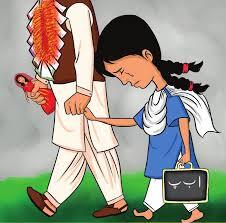
One of the Ordinance’s important features is its expanded accountability structure. Liability extends beyond the contracting parties to guardians, facilitators, and individuals involved in arranging or enabling a child marriage. Enhanced penalties reinforce that the offence is treated as a serious rights violation, not a procedural lapse. The power to intervene before a marriage is solemnized introduces a preventive dimension, allowing authorities to act before harm becomes irreversible.
At the same time, enforcement design raises practical questions. Effective implementation requires coordination between police, district administration, nikah registrars, and child protection authorities. Without clear operational guidelines, responses may vary across districts, weakening consistency. Defining an offence is only the first step; enforcement clarity determines whether the law delivers protection in practice.
A key enforcement concern relates to age verification. The Ordinance prohibits the registration of a child marriage and penalizes registrars who contravene this requirement. However, in many communities, the marriage ceremony is performed first and registration follows later. If age verification occurs only at the registration stage, preventive enforcement may be delayed. For the law to function effectively, verification must be embedded at the earliest point of solemnization, supported by clear documentation requirements — including verification of NADRA-issued CNICs or B-Forms — and clearly defined responsibilities.
The Ordinance also introduces strong criminal penalties for adults who contract marriage with a child, as well as for guardians who promote, permit, or facilitate child marriages. Offences are declared cognizable, non-bailable, and non-compoundable, and courts are directed to conclude trials within ninety days. These provisions signal seriousness and reduce the scope for negotiated settlements that historically undermined enforcement.
However, criminalization alone cannot resolve the underlying vulnerabilities associated with child marriage. Children who are prevented from or withdrawn from early marriages may require psychosocial support, educational reintegration, and protection services. Effective implementation therefore depends on linking enforcement mechanisms with Punjab’s broader child protection and social welfare systems.
There is also a practical governance dimension to consider. Birth registration gaps in certain districts, uneven awareness of the legal age requirement, and reliance on informal dispute resolution structures can complicate enforcement. Effective prevention will also depend on accessible community reporting mechanisms that allow credible information about an impending child marriage to reach authorities in time. Without training for frontline officials, dedicated budget allocation, reliable case-tracking systems, and safe channels for reporting, even well-drafted legislation may struggle to achieve consistent outcomes.
The Ordinance is a meaningful step forward. It sets a clear legal standard, strengthens penalties, and reflects political recognition that child marriage requires firm state response. Yet legislation alone does not transform entrenched social practices. The decisive phase now lies in administrative discipline: consistent verification procedures, defined institutional roles, effective monitoring, and integration with child protection services.
Punjab’s challenge has not been the absence of legislation, but the consistency and credibility of its enforcement. What it requires now is sustained enforcement clarity and institutional ownership. If implemented with precision and coordination, the Child Marriage Restraint Ordinance 2026 can move beyond symbolic reform and offer tangible protection to vulnerable children. If not, its promise will remain confined to statute books rather than reflected in lived realities.
Rashida Qureshi is a child protection and gender-based violence policy practitioner and Manager Programs at Search for Justice, focusing on legal reform and governance accountability in Pakistan. She tweets at @RashadaQureshi


1 Comment
Iftikhar
February 16, 2026Well done Rashida