



GENEVA, June 22, 2026: A UN expert has called for greater recognition of violence against mothers as a human rights issue, citing economic, reproductive, physical, and psychological harms.
Presenting her latest report to the United Nations Human Rights Council, Reem Alsalem, the UN Special Rapporteur on violence against women and girls, warned that mothers around the world continue to face widespread discrimination, abuse, and marginalisation because of their status as mothers, yet these experiences remain largely invisible in laws, policies, and official data.
According to the report, violence against mothers extends beyond physical abuse and includes economic exploitation, reproductive coercion, workplace discrimination, psychological harm, and barriers to accessing healthcare and social protection. The Special Rapporteur argued that motherhood is frequently treated as a private matter rather than a social responsibility deserving public support and legal protection.
Alsalem identified several factors that contribute to violence against mothers, including harmful social norms, gender inequality, poverty, economic dependence, and the persistent undervaluation of caregiving responsibilities. She noted that many mothers face a “motherhood penalty” that affects employment opportunities, wages, career progression, and economic security.
The report also draws attention to obstetric and reproductive violence, including disrespectful treatment during pregnancy and childbirth, denial of reproductive autonomy, and barriers to quality maternal healthcare. In addition, mothers experiencing domestic violence, conflict, displacement, or humanitarian crises often face heightened risks while carrying primary caregiving responsibilities.
Particular concern was expressed for mothers facing multiple forms of discrimination, including adolescent mothers, single mothers, migrant and refugee mothers, mothers with disabilities, mothers of children with disabilities, and women raising children in situations of poverty or social exclusion.
The Special Rapporteur warned that violence against mothers does not affect women alone. Its consequences often extend to children, families, and communities, contributing to cycles of disadvantage that can persist across generations.
While the report focuses on a global phenomenon, many of the issues highlighted resonate across developing countries where mothers frequently encounter barriers in accessing healthcare, childcare support, social protection services, and decent work opportunities. Human rights advocates have increasingly argued that strengthening protections for mothers is essential not only for advancing women’s rights but also for improving child wellbeing and family welfare.
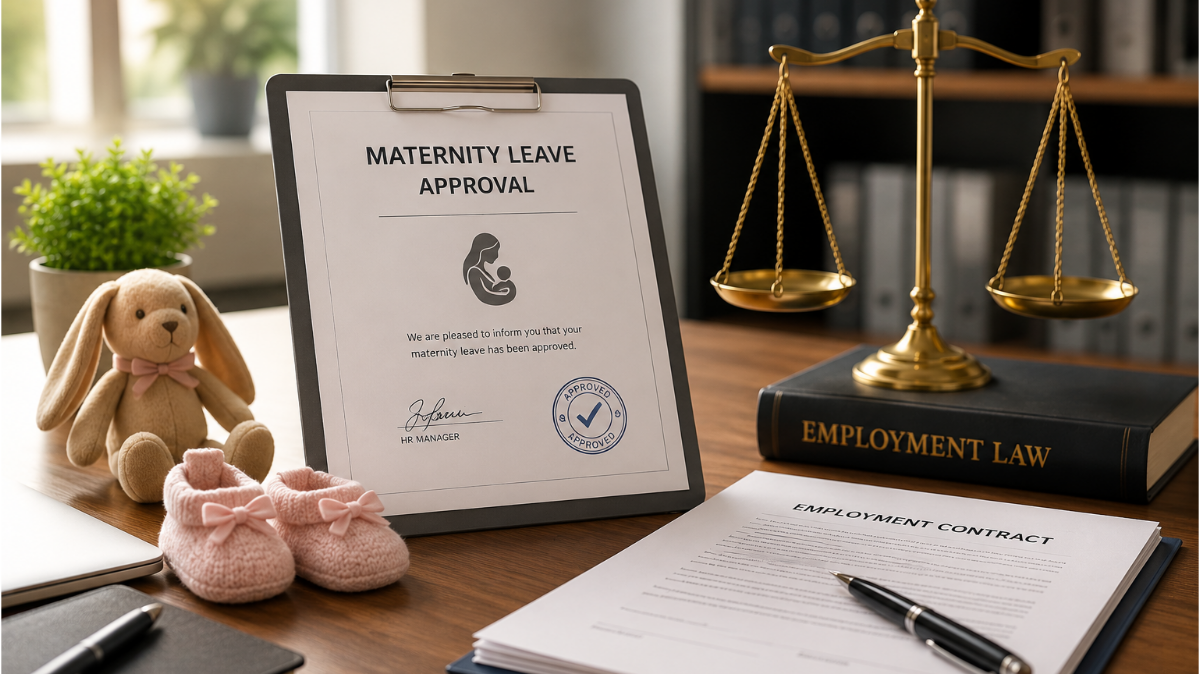
Among her recommendations, Alsalem urged governments to recognise mothers as a distinct category of rights-holders in law and policy, improve data collection on motherhood-related discrimination and violence, guarantee paid maternity leave, strengthen child support enforcement, ensure access to affordable maternal healthcare, and safeguard mothers’ rights in family and custody proceedings.
She also called for greater accountability for violations committed against mothers in conflict settings and urged governments to promote positive social attitudes towards motherhood through education and public awareness initiatives.
“Addressing violence against mothers requires us first to make them visible,” Alsalem said, stressing that effective policies must reflect both the challenges mothers face and their contributions to society.
The report is expected to contribute to growing international discussions on how governments can better protect mothers from discrimination, violence, and economic exclusion while recognising their role in the wellbeing and development of children and communities.