




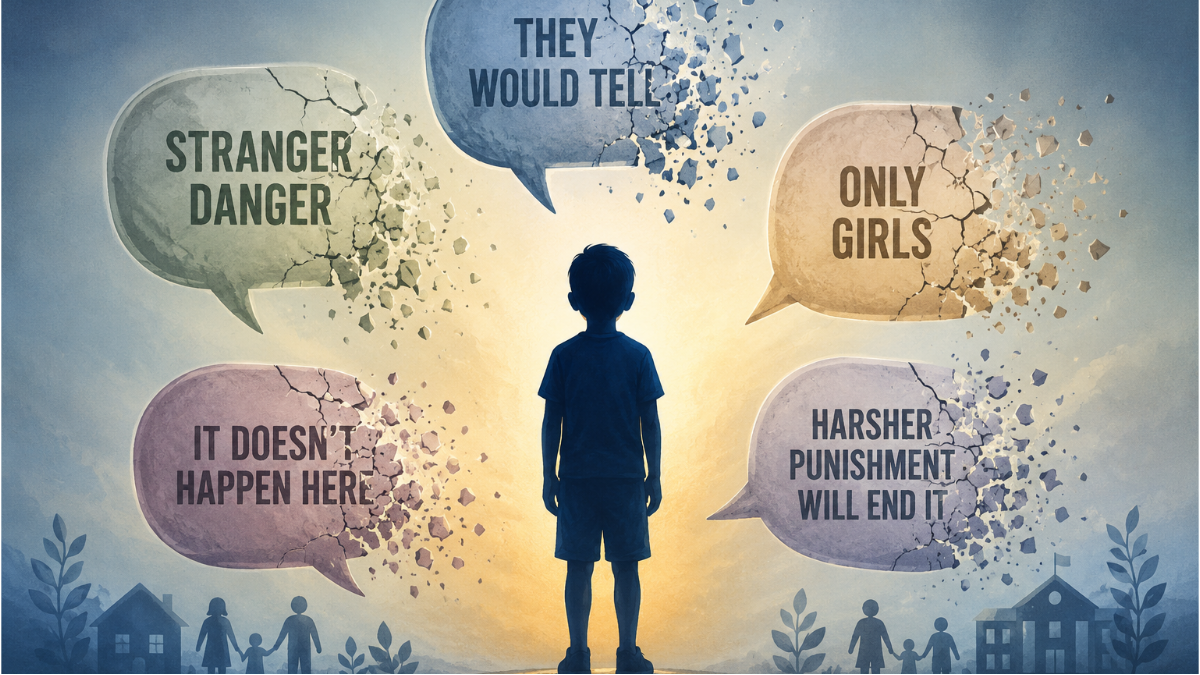
Every time a child sexual abuse case shocks Pakistan, public attention rightly turns to justice. Questions are asked, investigations begin, and demands for accountability grow louder. Yet once the immediate outrage subsides, one important question is often overlooked. Are our assumptions about child sexual abuse helping to protect children, or are they placing children at greater risk? The answer matters because misconceptions influence how parents protect their children, how communities respond to abuse, and how institutions shape policies. Unless these myths are challenged, they can continue to undermine efforts to prevent child sexual abuse and better protect children.
One of the most persistent misconceptions is that child sexual abuse is largely a Pakistani problem. Recent incidents may create that impression, but the evidence tells a different story. According to UNICEF, more than 370 million girls and women alive today experienced rape or sexual assault before the age of 18. An estimated 240 to 310 million boys and men also experienced sexual violence during childhood, with the figures rising significantly when non-contact forms of abuse are included. Every region of the world is affected, regardless of geography, culture, religion, or income.
Recognising that child sexual abuse is a global crisis should never reduce Pakistan’s sense of responsibility. On the contrary, it should encourage the country to strengthen its child protection systems while learning from international evidence and good practices. The problem is universal, but the responsibility to protect children begins at home.
Another widely held belief is that children are usually abused by strangers. Parents naturally teach children to avoid unknown people, and this advice remains important. However, focusing exclusively on strangers can create a false sense of security.
Evidence from Sahil’s annual Cruel Numbers reports consistently shows that perpetrators are often people children already know. Across successive reports, the largest group of identified perpetrators has been acquaintances, while relatives, neighbours, teachers, religious teachers, employers, and even family members also feature among reported offenders. By comparison, strangers account for a much smaller proportion of identified perpetrators.
Child sexual abuse frequently involves the misuse of trust rather than encounters with unknown individuals. Many perpetrators gradually groom children through attention, affection, gifts, authority, or emotional manipulation before abuse occurs. Protecting children therefore requires looking beyond strangers and recognising that safety must extend to every environment where children live, learn, play, worship, and spend their time.
Another assumption that deserves closer scrutiny is that child sexual abuse mainly affects girls. While girls face a disproportionate burden of sexual violence and their protection must remain a national priority, this should not make boys invisible.
The National Commission on the Rights of the Child’s State of Pakistan’s Children 2025 reports that police registered 17,348 sexual offences against children during 2025. Girls accounted for 65 per cent of reported victims, while boys represented 35 per cent. More than one in every three reported victims was therefore a boy, a reality that is too often overlooked in public discussions.
Boys frequently face additional barriers to disclosure. Social expectations surrounding masculinity, fear of ridicule, and concerns about being believed can discourage them from seeking help. Child sexual abuse is not confined to one gender, and every child deserves equal protection, equal support, and equal access to justice.
Perhaps the most damaging misconception is that children will immediately tell someone if they are abused. Adults often expect disclosure to happen quickly, assuming that silence means nothing has happened. In reality, many children remain silent for weeks, months, or even years.
Some are threatened by the perpetrator. Others fear they will not be believed or worry about the consequences for themselves or their families. Younger children may not fully understand what has happened, while adolescents often struggle with shame or embarrassment. During child protection programmes, parents frequently ask how they would know if something had happened to their child. The honest answer is that there is no single sign. This is why adults must build relationships based on trust, pay attention to changes in behaviour, and ensure that children know they will be listened to without blame or judgement whenever they choose to speak.
The final misconception is that harsher punishments alone will end child sexual abuse. Public anger after high-profile cases often leads to demands for tougher penalties, reflecting society’s understandable desire for justice. Holding perpetrators accountable is indispensable. Yet no punishment, however severe, can undo the harm suffered by a child.
The more important question is not simply how severely offenders are punished, but how consistently children are protected before abuse occurs. Strong laws are essential, but laws alone cannot recognise abuse, encourage disclosure, or create trust between children and the adults responsible for their safety. Justice will always remain indispensable. But the greatest measure of success is not the number of convictions secured after abuse has occurred. It is the number of children who never become victims in the first place.
Child sexual abuse thrives in silence, misunderstanding, and misplaced assumptions. Every myth left unchallenged makes it harder for children to be heard and easier for abuse to remain hidden. Replacing these misconceptions with evidence will not eliminate child sexual abuse overnight, but it will help families make better decisions, institutions respond more effectively, and communities become safer for children.
Every child deserves to grow up free from violence, abuse, and exploitation. Protecting that right begins by replacing assumptions with evidence and ensuring that every decision made by families, communities, institutions, and governments is guided by one simple principle: the safety and dignity of every child must always come first.
The writer is Rashida Qureshi, a development professional specialising in child protection, safeguarding, and the prevention of gender-based violence. She currently serves as Manager Programmes at Search for Justice (SFJ), Pakistan.