





By Syed Naeem Abbas
Pakistan’s livestock sector is not peripheral to the national economy; it is central to it. Livestock contributes roughly 14–15 percent to national GDP and accounts for more than 60 percent of agricultural value added. Millions of rural households rely on dairy cattle, buffalo, poultry, sheep, and goats for income, nutrition, and financial stability. Yet despite this structural importance, farm animal welfare remains unevenly implemented across production systems.
Pakistan’s legal framework for animal protection continues to rely primarily on the Prevention of Cruelty to Animals Act of 1890, a colonial-era statute never designed for modern commercial livestock systems. While the Khyber Pakhtunkhwa Animal Welfare Act 2024 represents a significant provincial reform effort, and Pakistan remains a member of the World Organization for Animal Health (WOAH), which provides internationally recognised welfare standards for housing, transport, and slaughter, implementation on the ground remains uneven. The challenge is not the absence of standards, but the failure to integrate them into routine farm-level and market-level decision-making.
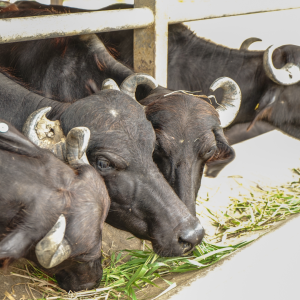
Farm animal welfare challenges in Pakistan operate across two distinct production realities. In large commercial poultry and dairy operations, production systems are structured around efficiency metrics such as feed conversion ratios, mortality thresholds, growth rates, and output per square foot. These enterprises are professionally managed and familiar with welfare science. However, management decisions are frequently shaped by cost–benefit calculations rather than ethical considerations. High stocking densities, rapid production cycles, and confinement systems can meet output targets while generating chronic welfare stress through overcrowding, restricted movement, behavioural deprivation, and handling strain. In such systems, the barrier is not ignorance but structural profit logic.
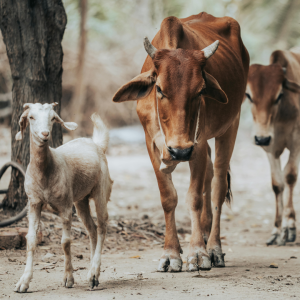
In contrast, the majority of livestock remains within smallholder and medium-scale systems, where animals are often individually recognised and closely tied to household survival. Here, welfare gaps stem from different pressures. Limited access to veterinary and extension services, financial constraints, and entrenched husbandry practices shape management choices. A farmer may care deeply for his animals yet still operate in poorly ventilated housing because infrastructure upgrades are financially unattainable. In these settings, compromise is driven less by efficiency and more by economic vulnerability.
This distinction is critical for policy design. Welfare science already provides measurable standards, including body condition scoring, lameness assessment, stocking density parameters, and humane slaughter protocols. Technical clarity is not the constraint. The deeper policy failure lies in overlooking human behaviour. Many frameworks assume that once standards are codified, compliance will follow. In reality, livestock keepers operate within fluctuating market prices, informal peer networks, social norms, and risk calculations. Decisions are shaped by survival and competitiveness, not by abstract
regulatory alignment.
Current implementation falls short for three structural reasons. First, welfare is rarely integrated into mainstream livestock governance. Extension services focus predominantly on disease control, vaccination, and productivity enhancement. Welfare is treated as supplementary rather than integral. Second, enforcement mechanisms remain uneven. Transport regulations and slaughter guidelines exist, yet inspections tend to prioritise hygiene and disease control over outcome-based welfare indicators. Without routine auditing focused specifically on welfare outcomes, standards lack operational force. Third, domestic markets seldom reward higher welfare production. Farmers who invest in improved housing or reduced stocking density rarely receive price premiums or market recognition, limiting voluntary adoption in a price-sensitive environment.
Contemporary animal welfare science is clear that farm animals are sentient beings capable of experiencing pain, fear, stress, and social attachment. Yet policy discourse often frames livestock primarily as production assets. When systems are designed exclusively around output — litres of milk, kilograms of meat, egg yield — efficiency can overshadow well-being. Chronic stress and overcrowding do not merely raise ethical concerns; they also undermine immunity, increase disease susceptibility, and elevate reliance on antimicrobial interventions. In the context of growing antimicrobial resistance, welfare becomes a public health issue as well as an agricultural one. Poor welfare is not only morally problematic; it is economically short-sighted.
If reform is to be meaningful, welfare must be embedded within institutional architecture rather than appended to it. Ongoing discussions around national animal health, welfare, and veterinary public health reforms present an opportunity to integrate welfare indicators into veterinary curricula, extension mandates, inspection frameworks, and performance monitoring systems. When welfare becomes a routine governance parameter rather than an optional advisory concept, compliance becomes structurally normalised.
Policy responses must also be differentiated. Large commercial operations require enforceable welfare benchmarks, periodic third-party audits, and integration of welfare standards into corporate compliance systems. Smallholder systems require practical, low-cost adaptations, targeted behaviour-change communication, reliable advisory support, and accessible micro-investment mechanisms for infrastructure improvement. A uniform regulatory template will fail because the drivers of welfare risk differ across production models.
Linking welfare reform to broader food safety and antimicrobial resistance strategies strengthens the institutional case for change. Integrating welfare within One Health frameworks aligns animal well-being with public health and food system resilience. In rural contexts, policy design should also recognise the influence of ethical and religious values that emphasise compassion toward animals. When humane treatment aligns with social identity, compliance becomes socially reinforced rather than externally imposed.
Progress should ultimately be measured not by legislative output but by field-level outcomes: reduced injury prevalence, lower mortality rates, improved body condition, and reduced routine antibiotic use. Quantitative metrics must be accompanied by qualitative assessment of farmer perceptions and behavioural shifts. Sustainable reform requires both measurable indicators and institutional understanding.
Farm animal welfare intersects directly with Pakistan’s national priorities, including food safety, export competitiveness, public health, climate resilience, and rural income stability. Global supply chains are increasingly sensitive to welfare compliance. As the livestock sector undergoes rapid commercialisation, institutional decisions taken now will shape production systems for decades. Delayed integration of welfare principles will only make future reform more complex and costly.
Farm animal welfare reform is not a choice between productivity and compassion. Sustainable productivity depends on management systems that recognise both economic realities and animal well-being. Legislation alone does not alter farm practice. Implementation depends on how governance frameworks align standards with incentives, risk management, and social norms.
Pakistan does not lack legal provisions or technical knowledge. What it requires is institutional design that places behavioural reality at the centre of policy execution. Only then can welfare move from statutory language into the barns, sheds, and poultry houses where daily decisions determine outcomes.

Syed Naeem Abbas writes on sociology, livestock systems, and animal welfare policy. He can be reached at syednaeema31@gmail.com